Deprecated: Elementor\Core\Files\CSS\Post::add_controls_stack_style_rules(): Implicitly marking parameter $all_controls as nullable is deprecated, the explicit nullable type must be used instead in /home/spps/public_html/wp-content/plugins/elementor/core/files/css/post.php on line 221
Deprecated: Elementor\Core\Files\CSS\Base::add_controls_stack_style_rules(): Implicitly marking parameter $all_controls as nullable is deprecated, the explicit nullable type must be used instead in /home/spps/public_html/wp-content/plugins/elementor/core/files/css/base.php on line 552
Deprecated: Elementor\Core\Files\CSS\Base::get_active_controls(): Implicitly marking parameter $controls as nullable is deprecated, the explicit nullable type must be used instead in /home/spps/public_html/wp-content/plugins/elementor/core/files/css/base.php on line 921
Deprecated: Elementor\Core\Files\CSS\Base::get_active_controls(): Implicitly marking parameter $settings as nullable is deprecated, the explicit nullable type must be used instead in /home/spps/public_html/wp-content/plugins/elementor/core/files/css/base.php on line 921
Deprecated: Elementor\Core\Files\CSS\Base::get_style_controls(): Implicitly marking parameter $controls as nullable is deprecated, the explicit nullable type must be used instead in /home/spps/public_html/wp-content/plugins/elementor/core/files/css/base.php on line 949
Deprecated: Elementor\Core\Files\CSS\Base::get_style_controls(): Implicitly marking parameter $settings as nullable is deprecated, the explicit nullable type must be used instead in /home/spps/public_html/wp-content/plugins/elementor/core/files/css/base.php on line 949
Deprecated: Elementor\Core\DynamicTags\Dynamic_CSS::add_controls_stack_style_rules(): Implicitly marking parameter $all_controls as nullable is deprecated, the explicit nullable type must be used instead in /home/spps/public_html/wp-content/plugins/elementor/core/dynamic-tags/dynamic-css.php on line 104
Deprecated: Elementor\Stylesheet::add_rules(): Implicitly marking parameter $query as nullable is deprecated, the explicit nullable type must be used instead in /home/spps/public_html/wp-content/plugins/elementor/includes/stylesheet.php on line 141
Deprecated: Elementor\Includes\Elements\Container::__construct(): Implicitly marking parameter $args as nullable is deprecated, the explicit nullable type must be used instead in /home/spps/public_html/wp-content/plugins/elementor/includes/elements/container.php on line 42
Deprecated: Elementor\Includes\Widgets\Traits\Button_Trait::render_button(): Implicitly marking parameter $instance as nullable is deprecated, the explicit nullable type must be used instead in /home/spps/public_html/wp-content/plugins/elementor/includes/widgets/traits/button-trait.php on line 517
Deprecated: Elementor\Includes\Widgets\Traits\Button_Trait::render_text(): Implicitly marking parameter $instance as nullable is deprecated, the explicit nullable type must be used instead in /home/spps/public_html/wp-content/plugins/elementor/includes/widgets/traits/button-trait.php on line 648
Deprecated: ElementorPro\Modules\Posts\Traits\Button_Widget_Trait::render_button(): Implicitly marking parameter $instance as nullable is deprecated, the explicit nullable type must be used instead in /home/spps/public_html/wp-content/plugins/elementor-pro/modules/posts/traits/button-widget-trait.php on line 491
Deprecated: ElementorPro\Modules\Carousel\Widgets\Media_Carousel::print_slider(): Implicitly marking parameter $settings as nullable is deprecated, the explicit nullable type must be used instead in /home/spps/public_html/wp-content/plugins/elementor-pro/modules/carousel/widgets/media-carousel.php on line 305
Deprecated: ElementorPro\Modules\Carousel\Widgets\Base::print_slider(): Implicitly marking parameter $settings as nullable is deprecated, the explicit nullable type must be used instead in /home/spps/public_html/wp-content/plugins/elementor-pro/modules/carousel/widgets/base.php on line 579
Deprecated: ElementorPro\Modules\Payments\Widgets\Paypal_Button::render_button(): Implicitly marking parameter $instance as nullable is deprecated, the explicit nullable type must be used instead in /home/spps/public_html/wp-content/plugins/elementor-pro/modules/payments/widgets/paypal-button.php on line 225
Deprecated: ElementorPro\Modules\Payments\Classes\Payment_Button::render_button(): Implicitly marking parameter $instance as nullable is deprecated, the explicit nullable type must be used instead in /home/spps/public_html/wp-content/plugins/elementor-pro/modules/payments/classes/payment-button.php on line 499
Deprecated: ElementorPro\Modules\Payments\Widgets\Stripe_Button::render_button(): Implicitly marking parameter $instance as nullable is deprecated, the explicit nullable type must be used instead in /home/spps/public_html/wp-content/plugins/elementor-pro/modules/payments/widgets/stripe-button.php on line 249
Sustainment Needs for Efficiency
Defense platforms have advanced to become complex system-of-systems, utilizing hundreds of technologies and suppliers spread across increasingly globalized supply chains. Military users have gained numerous operational advantages from these advancements, mainly as platforms have been progressively developed with multi-role characteristics and modular architectures to allow for faster reconfigurations or updates. But these advanced capabilities have come at steeply higher costs for military users with each new generation of equipment, not only at the point of acquisition but also – and in particular – when considering life-cycle costs.
The through-life sustainment of defense platforms has presented complex challenges to militaries, which have struggled to overcome these strategically. Steep growth in per unit costs of high-end platforms has translated into the capitalization of smaller operational inventories, leading to user requirements for higher asset availability. Moreover, despite the need to reduce downtime for defense platforms that users are more reliant on than ever, their inherent complexity has typically translated into extended maintenance and repair turnaround times simply because there is a lot more that can go wrong and does go wrong.
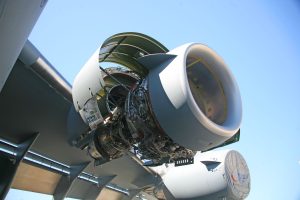
Another limiting factor in these scenarios is the technician skill levels needed to maintain and repair high-end defense platforms and the training, tools, and infrastructure required to execute these tasks. These challenges have often meant that for military users, the unavailability of assets can multiply in unexpected ways leading to growing backlogs, extended downtime, and increasing costs – all at the same time, even. As a result, more innovative, more efficient models are needed to sustain legacy platforms, particularly the maintenance, repair, and overhaul (MRO) of equipment that must have high availability to service routine training and operations.
Smart Technologies and Automation
Condition-Based Maintenance (CBM), which exploits real-time data to prioritize and optimize maintenance resources as and when needs arise, holds the key to allowing military users to resolve the inefficiencies of manual, labor-intensive, and time-consuming models currently used to deliver asset availability. Rooted in the condition-based monitoring of assets through vibration, infrared, acoustic, electrical, pressure, and oil analysis, CBM proposes tools, techniques, and methods to ascertain the real-time health of assets and make predictions about their performance.
By scientifically understanding how different components degrade during operations, it is possible to schedule inspections, repairs, and overhauls at appropriate intervals so that any incipient failure can be detected in advance. A mix of data collected continuously or at predetermined intervals using sensors, visual inspections, operational and maintenance data, and scheduled tests can help predict equipment failure before it occurs and help track the remaining useful life (RUL) of life-limited parts. This continuous monitoring is possible non-invasively or without changing how assets are operated – saving time and labor costs on manual inspections.
By scientifically understanding how different components degrade during operations, it is possible to schedule inspections, repairs, and overhauls at appropriate intervals so that any incipient failure can be detected in advance.
Manual inspections routinely require the removal and reinstallation of structures, contributing to wear and tear, damage, and deterioration of assets over their lifespan. Periodic inspections are therefore replaced by automated “continuous” inspections using sensors and analytics to detect imminent failures and predict degradation issues more economically and efficiently. Using CBM, maintenance and repair work becomes essential only after one or more indicators show equipment is likely to fail or that equipment performance is deteriorating. By utilizing real-time operational and maintenance data, operators can yield gains such as:
-
- Detection of failures earlier and before they occur
-
- Reduced costs of breakdown, unplanned downtime, and labor hours
-
- Fixing failures only when they are needed
-
- Increased throughput and time between maintenance
-
- Increased asset availability for operators
-
- Optimized inventories for emergency spare parts, and
-
- Extended platform lifespans as a result of slower asset deterioration
Human Factors are Decisive
In short, CBM promises improved operational availability and optimized maintenance at once. However, the move to sustainment models utilizing CBMmusto be balanced by reliability so that equipment and operator safety is not compromised. This is less the case for new-generation platforms developed with built-in health monitoring systems. However, vast inventories of legacy platforms currently in operational service were designed by original equipment manufacturers (OEMs) without condition-based monitoring systems. It is here that the most significant performance challenge lies in the sustainment of defense platforms.
Including more CBM functions in maintenance, repair, and overhaul (MRO) requires close coordination between regulatory authorities, OEMs, and MRO service providers to move to develop smarter sustainment models and maintenance schedules. In addition, for the cost of new resources to be amortized by the potentials savings offered by CBM, low-cost, rapidly deployable toolkits for analytics, prognostics, knowledge management, and actionable intelligence that can lead to the earlier detection of faults and imminent failures, reduced timelines for troubleshooting and improved asset availability are essential.
Despite intelligent technologies and automation being the key enabler for condition-based maintenance, its practical implementation goes beyond sensor technologies and software.
Technical teams responsible for the sustainment and MRO of assets must be adequately trained and educated on concepts related to CBM – from the different types of condition monitoring methods, tools, and techniques, and their benefits, to the pitfalls and risks of not collecting and logging data as it is required to achieve the desired results. The viability of CBM models hinges on limiting user error. It will necessarily require buy-in throughout the value chain, encompassing operators, maintenance technicians, inventory managers, and the regulatory authorities which certify equipment safety and worthiness. Despite smart technologies and automation being the key enabler for condition-based maintenance, its practical implementation goes beyond sensor technologies and software.
With significant amounts of energy needed to power bases, facilities and the continuous movement and transportation by air, sea and, of course, land all the time, militaries are energy hungry enterprises. Every year, Gulf militaries collectively spend several hundred million dollars consuming electrical energy, including millions of gallons of fuel to power diesel generators. Despite broader national efforts around the Arab Gulf where governments have set in place aggressive renewable energy targets to massively increase installed capacity, Gulf militaries remain in lag in strategically adopting renewable energy to meet their future energy needs.
Investment in renewable energy across the Arab Gulf has grown exponentially over the past five years – and that trend is set to continue. Driving these investments into renewable energy around the Arab Gulf is an effort to mitigate against rising energy costs which could create drag on economic growth as well as guarding against potential energy supply disruptions as well as to diversify towards more clean energy generation and distribution for the future. For Gulf militaries, the adoption of renewable energy is vital to achieve distributed power generation as national security requires the military to have electricity even during blackouts which may affect other parts of the country.
The National Security Consideration
The notion of distributed power generation is absolutely essential in the national security context and for assuring military readiness round the clock. Natural phenomena or sabotage threats can cause massive power outages which will outstrip the ability of backup generators and fuel supplies to fill gaps – and put critical military operations at risk. Typically large, complex and interconnected, electricity grids can be vulnerable to threats from nature such as extreme weather events and attacks by criminals, terrorists and saboteurs. In the Arab Gulf, such risks are more acute as critical infrastructure such as electricity generation plants and distribution grids tend to be built larger and are geographically concentrated.
“Without electricity from civilian electricity grids even the most advanced militaries can be crippled – yet, most military bases remain largely unprotected against the potential long-term interruption of electrical power.”
Consider, for example, a sniper attack on a Pacific Gas and Electric substation in California, United States, in 2013, which disabled 17 transformers and shut down the plant within minutes. Fortunately, engineers were able to route power from other sources and avert a total blackout but alternate sources may not always be readily available and, in any case, the repair or replacement of damaged transformers can potentially take months. Without electricity from civilian electricity grids even the most advanced militaries can be crippled – yet, most military bases remain largely unprotected against the potential long-term interruption of electrical power.
Diesel generators which provide emergency power are a starting point however in other scenarios fuel supply lines themselves can be disrupted. Global fuel market volatility can put mission-critical energy supply at risk, particularly in times of conflict where demand and supply dynamics for such commodities behaves abnormally. On the other hand, the refueling of diesel generators across dispersed locations in major emergency situations presents obvious threats and risks at multiple levels, from supply chain management and logistics to severely disrupted military operations themselves.
The Gulf Context for Solar Power
Fortunately, readily available solutions already exist for Gulf militaries to increase resiliency against the threat and risks of blackouts. Renewable energy, specifically solar photovoltaic systems, provide a long-lasting solution to generate electricity directly from sunlight and will be critical for Gulf militaries to achieve a distributed power generation capacity. Solar photovoltaic infrastructure poses low maintenance demands, does not require any type of refueling and can be positioned almost anywhere in the climes of the Arab Gulf which have among the highest solar irradiance levels anywhere in the world.

Consider the UAE, for example, which has huge solar potential owing to a mean annual solar radiation of 2285 kWh/m2, an average sunshine of 10 hours per day and no presence of clouds exceeding 20 per cent of the year. It is a similar equation elsewhere in the Arab Gulf and while high humidity and dust particles in the atmosphere can reduce the solar intensity, the UAE already ranks among the world’s top producers of concentrated solar power, with Saudi Arabia rapidly catching up. The UAE’s ambitious targets and investment into solar power capacity – including construction of the world’s largest solar power plant in Abu Dhabi, Shams I – have demonstrated the efficacy for solar power in the region to thrive as a reliable, clean and low maintenance energy source.
For Gulf militaries, turning to solar powered “microgrid” for major military infrastructure can reduce critical dependence on theoretically vulnerable civilian generation and distribution grids at the same time as resolving the challenge of off-grid power requirements at once. Solar has proven an effective alternative to traditional energy sources for militaries elsewhere around the world. A “microgrid” comprising a 120-kilowatt solar array system and a 300-kilowatt energy storage system at a military base in the United States has successfully demonstrated the ability to be disconnected from the regular civilian power grid and become self-sustaining – providing electricity derived from solar energy to buildings that need to be served.
Harnessing In-Reach Capacity
As a model to baseline against, the United States’ army, navy and air force services all expect to obtain the majority of their energy requirements from renewable sources, with a particular focus on solar energy, within the few years. As well as promoting a greener environment through reduced CO2 emissions, growing installed renewable energy capacity promises improved energy supply reliability, lower long-term costs and, crucially, enhances national security by mitigating scenarios of major civilian blackouts.
“With sufficient investment into microgrids, militaries may even be able to supply excess energy generated from solar into the civilian electricity grid, potentially allowing recoup on investment even sooner.”
The need to procure, transport, maintain and refuel diesel generators – which can be obtrusive, heavy, and, at times, unreliable – across large numbers of fixed sites and remote locations is tremendously minimized. Solar power is however also easily portable and can be utilized to provide bases in remote locations with dependable power. Being less susceptible to failure and enemy fire, portable solar arrays can therefore be harnessed to enhance the tactical edge and security of expeditionary forces by reducing demands for resupply missions that can put personnel and operations at risk.
Solar powered microgrids using rooftop and ground-based solar arrays are largely one-time costs that will allow the military to generate most of its electricity from renewable sources within years and are available at increasingly manageable costs. Initial upfront costs will create immediate savings in electricity bills the military currently pays to civilian suppliers. With sufficient investment into microgrids, militaries may even be able to supply excess energy generated from solar into the civilian electricity grid, potentially allowing recoup on investment even sooner.
]]>Dense threat environments will threaten freedom of maneuver through anti-access, area denial (A2AD) and radically compressed timelines will challenge the ability to prosecute time-sensitive targets as adversaries deploy next-generation weapons systems outfitted with advanced stealth, speed, and flight characteristics. As a result, militaries must adapt to the technologically disruptive environment where the speed of warfare is massively accelerated.
Legacy constructs for operational planning, command and control (C2), and delivering effects will become redundant. To operate at the speed of relevance, increasing levels of automation need to be introduced into the OODA cycle by exploiting emerging technologies. In responding to these new dynamics, the space domain will be vital to militaries for the better preparation, management, and assessment of future battlespaces.
By proposing the ability to see, understand, decide and act faster than adversaries at the operational and, increasingly, tactical levels of warfare, space-based capabilities will be decisive for preserving freedom of maneuver and allowing effective responses in relevant timelines.
Legacy constructs for operational planning, command and control (C2) and delivering effects will become redundant.
Specifically, space will be crucial for enabling three key capabilities: A new positioning, navigation and timing (PNT) capability independent of Global Positioning System (GPS), which is increasingly vulnerable to interference and countermeasures; Space-based intelligence, surveillance, tracking and reconnaissance (ISTAR) to support left-of-launch operations, provide threat early warning (TEW) and track mobile surface and airborne targets in real-time, and; enabling a more robust command, control, communications and battle management (C3BM) architecture that is fit for the future.
Revolution in Space
The space domain is at the start of a revolutionary transformation being made possible by technological breakthroughs that make it easier, faster and less costly than ever before to deploy satellites and space vehicles to perform a growing range of missions. The formation of new satellite constellations designed to provide persistent all-weather overhead coverage with high reliability and built-in redundancy are now in the works. Thousands of miniaturized satellites operating in Low Earth Orbit (LEO) at altitudes of 750-1200 kilometers are expected to be launched in the coming years.
There is already more data available than legacy data processing systems can exploit and which existing radiofrequency (RF) can reliably transmit at the scale, speed and security required.
At the same time, accelerating advances in artificial intelligence (AI) is making it possible to rapidly process and fuse tremendous amounts of data, while emerging technologies such as optical communication (OC) will have a revolutionary impact for secure, long haul communications with low latency. The deployment of 5G networks will make possible internet of military things (IoMT) and the Combat Cloud, but it is OC, particularly in the space capabilities context, that will fundamentally redefine the future for military communication networks.
There is already more data available than legacy data processing systems can exploit and which existing radiofrequency (RF) can reliably transmit at the scale, speed and security required. This challenge will intensify as the data required for exploitation grows exponentially in future operational environments. Offering more secure and higher transmission rate inter-satellite and space-to-ground links, OC helps overcome the challenge of RF communications degraded by electronic warfare and will allow users to port terabits of data in seconds across distributed operational theatres.

Space-based capabilities exploiting AI and OC together will enable multi-domain situational awareness and enriched battlespace visualization to warfighters in unprecedented ways. Connecting ground-based C2 elements and remote warfighting platforms, space-based systems will be able to undertake mission processing, tasking and prioritization to achieve the information superiority allow militaries to move at the speed of relevance. Data dissemination routed across a mesh network in space will be able to generate optimized solutions for sensor/shooter tasking and allocation, while increasing levels of automation will enable kill chain closure in unprecedented timelines.
Moving at Speed
As the military use of space expands and new users of space emerge – military and non-military – the space domain will continue to become more congested, cluttered and contested. The use of space is shared and, in many cases, so too will the use of specific space assets – not only in-country with respect to sovereign capabilities but also those positioned within multinational structures or acquired through commercial agreements.
Beyond just a focus to generate space situational awareness, military space commands will therefore need to work closely with civilian and military counterparts domestically and, progressively, in the international context to effectively direct, deconflict and synchronize space plans, policies and operations. Given that military actors will not wield a monopoly over all aspects of C2 and decision-making in space, establishing a dedicated space command staffed by specialist personnel although imperative is just a starting point in a process that is will be evolutionary.
To truly absorb and unleash the potential offered by space and related emerging technologies, militaries will need to embrace innovation to strategically evolve towards a new way of warfare – across the services, with an emphasis on pushing the boundaries of joint warfighting.
Military space commands will need to be organized and led in ways that do not necessarily reflect traditional military approaches to military activity. The ability to embrace innovation at enterprise level will be pivotal in allowing militaries to harness the potential offered by space for military operations. Innovation in this context is not interpreted only in technological terms but extends to the continuous improvement of working models and processes to make them highly adaptable to changing needs and scenarios.
The challenge of moving at speed to exploit the opportunity offered by the space domain and emerging technologies relevant to its use is complex. As models are generated for the development future military space capabilities, attention will again by focused on the broader challenge of transformation facing militaries.
Plug-and-play space technologies in themselves do not trigger a transformative or lasting impact and will certainly not deliver the overmatch capabilities sought for the future. To truly absorb and unleash the potential offered by space and related emerging technologies, militaries will need to embrace innovation to strategically evolve towards a new way of warfare – across the services, with an emphasis on pushing the boundaries of joint warfighting.
Space-enabled C2BM with increasing levels of automation will redefine the notion of C2 as mission command is implied and decision-making is delegated to the lowest tactical levels possible. The ability of militaries to innovate and adapt to new realities by effectively evolving doctrine, training and operational paradigms, proactively where possible and reactively where necessary, as space capabilities are expanded to present new downstream uses will be decisive to achieving future competitive advantage.
]]>